

What is an Engine Misfire
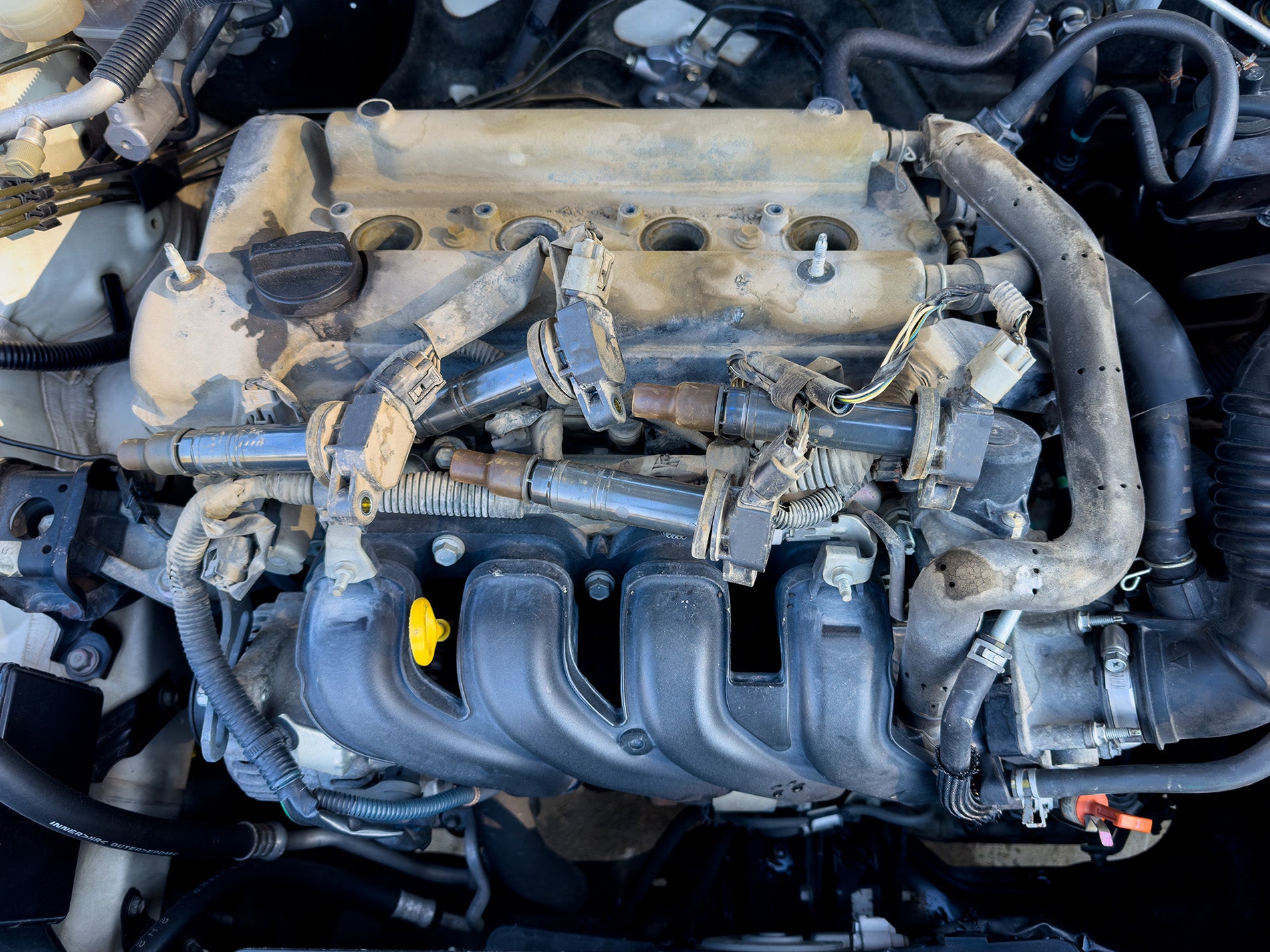
An engine misfire occurs when one or more cylinders fail to ignite the air-fuel mixture properly, resulting in a shudder or hesitation in your engine. You may also hear this referred to as “engine slipping.”
When this happens, your car is telling you that there’s something wrong that requires your immediate attention.
In this comprehensive guide, we’ll break down what causes an engine misfire, how to spot a problem, and what to do next.
What Causes an Engine Misfire?
Unfortunately, an engine misfire can be caused by several things, ranging from a faulty sensor to a faulty spark plug to a clogged fuel injector. That said, here are the usual suspects behind the issue:
Multiple components within the ignition system may be responsible for an engine misfire, but no matter how small the component, it’s a critical concern that needs immediate attention. Engine misfire causes within the ignition system include a faulty spark plug, weak battery, or failing ignition coil.
Clogged or damaged fuel injectors or fuel filters can mess with the engine firing properly. In addition, weak fuel pressure from a failing fuel pump can affect combustion.
The oxygen and mass airflow (MAF) sensors feed data to the electronic control unit (ECU) that tells your engine how much air and fuel to deliver to the engine to get it started and get you on the move. If those sensors are damaged or faulty, they can send mismatched signals that result in an engine misfire.
Your Ford's engine relies on the perfect balance of air and fuel in order to ignite. When there is a vacuum leak, unexpected air moves into the engine, disrupting the balance and causing your ECU to overcompensate. Unfortunately, this is the perfect condition for an engine misfire.
Warped valves, worn piston rings, clogged catalytic converters… the list of possible culprits that lead to an engine misfire is endless.
Igniting your engine is all about timing and balance. When the timing control system fails, even a slight deviation can cause an engine misfire.
What Does it Feel Like? Engine Misfire Symptoms
When you hear the term "engine misfire," you may picture a shaking BOOM from the engine, smoke, flames, the works.
In reality, an engine misfire can be incredibly subtle and even go unnoticed altogether.
The most common signs of an engine misfire include:
- Rough idling
- Shaking when at a complete stop
- Loss of power or hesitation of the accelerator
- Sputtering or odd exhaust noises
- Sudden shudder or jerking sensation
- An illuminated check engine light, signaling a need for a Ford check engine service
How to Fix an Engine Misfire: Diagnosis and Seeking Professional Guidance
You've felt the shudder and unexpected push-and-pull of your vehicle. So, what happens next?
With a variety of causes that could be at the root of your engine misfire, it’s in your Ford's best interest to have it diagnosed to find the underlying problem.
Whether you’re diagnosing the issue yourself or looking for professional guidance from a certified service center, here is how we will help you get to the root of the problem and the solution to get you and your Ford back on the road safely.
| Approach | Diagnosis | Solution |
|---|---|---|
| Inspect spark plugs | Removal and inspection of spark plugs reveal signs of wear and damage | Replace faulty spark plugs and ensure they are properly gapped and installed |
| Examine ignition coils | Tested ignition coils using a multimeter tool or swapped a suspected faulty coil between cylinders and a misfire followed | Replace faulty ignition coils |
| Check fuel injectors | Listened for clicking sounds from each injector using a mechanic's stethoscope and discovered that the injector was silent or inconsistent | Clean fuel injectors using a specialized cleaning kit first. If that fails to fix the issue, replace the faulty injectors |
| Inspect vacuum leaks | Used a smoke machine or a carburetor cleaner to check for leaks around hoses, gaskets, and the intake manifold, and discovered a leak | Repair or replace any damaged hoses, gaskets, or components causing the leak |
| Test compression | Performed a compression test using a compression gauge and discovered that the compression is low | Low compression can result from a variety of mechanical issues. At this stage, seek guidance from a trusted Ford-certified mechanic! |
While it is possible to conduct a "DIY engine misfire diagnosis," we recommend seeking Ford service near you from licensed service professionals.
Have a Sputtering Engine? Santee Ford is Here to Help!
The technicians in our service department are here to diagnose and repair a sputtering engine so you can drive with confidence. Schedule your appointment online, or give us a call!